
Footfall data has moved far beyond basic people counting. Today, retail footfall insights connect customer behavior to layout design, staffing efficiency, marketing performance, and long-term planning. By transforming store traffic into actionable intelligence, retailers gain clarity over what truly drives performance inside physical spaces. Supported by accurate footfall measurement, privacy-safe analytics, and clear visualization, footfall data empowers retailers to compete in a data-driven retail landscape. By applying retail footfall insights correctly, retailers can transform raw store traffic into actionable intelligence that improves layouts, staffing decisions, marketing performance, and long-term planning.
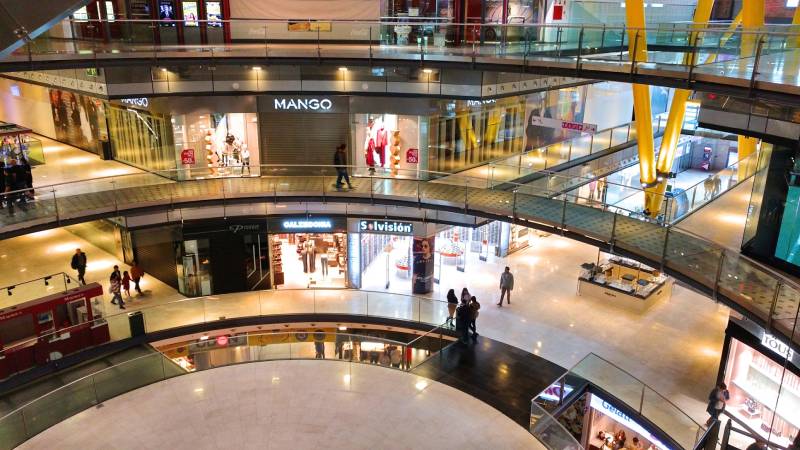
Footfall data refers to the measurement and analysis of how many people enter a retail space and how they behave once inside. In modern retail, footfall data explained in its simplest form is no longer enough. Retailers now use advanced tools to understand movement patterns, dwell time, and engagement across different store zones. Unlike transaction data, which only records completed purchases, footfall data captures customer behavior throughout the entire in-store journey. This allows retailers to identify where customers hesitate, browse, or exit without buying. When combined with store traffic data, footfall insights fill the visibility gap between store entry and point of sale, offering a more complete picture of customer behavior.
At a basic level, footfall measurement tracks how many people visit a store within a defined time period. However, modern footfall systems transform this raw count into behavioral intelligence by analyzing how customers interact with the store environment.
This shift mirrors how online analytics evolved from page views to full customer journey analysis. Physical retail is now undergoing the same transformation through store traffic analytics.
Modern footfall analytics allows retailers to move beyond counting visitors and instead understand flow, dwell time, and engagement at a granular level.
Transaction data shows what customers purchased. Store traffic data shows what customers did before purchasing—or why they did not purchase at all. Both data sets are important, but transaction data alone cannot explain missed opportunities.
Without store traffic insights, retailers struggle to isolate which factor is responsible. Retail footfall insights provide the missing behavioral layer by showing how many potential buyers entered the store and how they navigated it.
For this reason, many retailers now treat store traffic analytics as a leading indicator, while sales data is viewed as a lagging one.
Counting people at the door is not the same as understanding customer behavior. Traffic counts answer “how many,” while true retail footfall insights explain “why” and “how” customers behave inside the store. True footfall insights combine multiple dimensions of in-store activity to add context to raw numbers.
For example, two stores may record identical visitor numbers but deliver very different sales outcomes. Retail footfall insights reveal whether customers linger, browse, or exit quickly, helping retailers identify what drives conversion differences.
Tracking dwell time and movement patterns helps retailers identify friction points and optimize layouts for higher engagement.
Modern footfall analytics relies on multiple technologies designed to capture accurate, privacy-compliant in-store data. These systems automatically collect and analyze customer movement, turning physical behavior into structured datasets that support retail traffic analysis.
Retailers typically use one or more of the following methods:
mmWave Radar technology (TAC-B) is the superior alternative to cameras. Radars are not affected by light conditions, shadows, or reflections. While cameras are common, Radar sensors represent the current gold standard for precision and reliability.
Each footfall measurement method varies in cost, accuracy, and depth, making the right choice dependent on store size, layout complexity, and business goals.
While retail footfall insights are powerful, accuracy and privacy remain critical considerations. Camera-based people counting can capture faces and other identifiers, so it often relies on software masking/anonymization and tighter governance to reduce privacy risk. Radar-based tracking, on the other hand, is inherently anonymous by design: it uses radio waves (not optics) to detect movement and presence, producing counts and motion patterns without recording faces or personally identifiable imagery. This “privacy by design” nature is a major advantage.
Retailers must ensure compliance with data protection regulations such as GDPR and avoid collecting personally identifiable information.
Privacy-safe, de-identified footfall data enables retailers to gain behavioral insights without compromising customer trust. When implemented correctly, footfall analytics delivers reliable insights while maintaining regulatory compliance.
Raw footfall numbers gain meaning when translated into performance metrics. Store traffic analytics allows retailers to evaluate how effectively they convert visitors into buyers and how well the store experience supports engagement.
Common metrics derived from footfall data include:
These metrics reveal how customers interact with the store long before a transaction occurs.
Conversion rate calculations fundamentally depend on footfall data because footfall forms the denominator of the conversion formula.
Store traffic analytics become truly valuable when retailers translate metrics into decisions. Collecting data alone does not improve performance. Action does. Retail footfall insights allow retailers to compare visitor behavior against outcomes such as sales, dwell time, and queue length. This comparison helps identify whether a problem is caused by layout, merchandising, staffing, or customer experience issues.
By using store traffic analytics in this way, retailers can test changes, measure results, and refine store performance based on evidence rather than assumptions. Retail footfall insights turn observation into optimization.
Store layout directly affects how customers move, browse, and engage. Footfall data makes these interactions visible by revealing where customers naturally go, where they pause, and which areas they avoid entirely. Without retail footfall insights, layout changes are often based on intuition. With them, retailers can redesign spaces using real customer behavior as the foundation.
Tracking dwell time and movement patterns helps retailers refine product placement and optimize store design for higher engagement and satisfaction.
Retail footfall insights ensure merchandising decisions are driven by how customers actually behave in-store.
Hot zones are areas where customers spend the most time. Cold zones receive little attention and often represent lost sales opportunities.
This approach allows continuous improvement rather than one-time redesigns. Retail footfall insights enable retailers to measure the impact of each change and refine layouts over time.
Staffing is one of the largest controllable costs in retail. Retail footfall insights help retailers align staffing levels with real customer demand rather than static schedules or assumptions. By analyzing hourly and daily store traffic data, retailers can match staff availability to actual store activity.
Retail footfall insights transform staffing from reactive scheduling into proactive workforce planning.
Daily footfall reports are often underused. Many retailers collect the data but fail to act on it. The real value lies in interpreting patterns over time.
When analyzed consistently, these reports become strategic tools rather than static dashboards. Retail footfall insights emerge through trend analysis, not isolated data points.
Over time, retailers can turn daily footfall insights into operational playbooks that define:
This shift turns footfall reporting into a decision engine rather than a monitoring exercise.
Footfall data becomes more actionable when it is visualized clearly. Dashboards, heatmaps, and flow diagrams allow teams to understand complex behavior patterns at a glance. Visual tools reduce reliance on spreadsheets and make store traffic analytics accessible to non-technical teams.
Visual dashboards enable retailers to monitor footfall analytics across daily, weekly, and yearly views, supporting faster operational decisions. Retail footfall insights are most effective when teams can see them clearly and act quickly.
Footfall data is not only operational. It plays a critical role in long-term retail planning by supporting forecasting, expansion, and investment decisions.
Historical footfall trends reveal patterns around weekends, holidays, and promotional cycles. These patterns allow retailers to plan proactively instead of reacting after problems occur. Footfall data is essential for sales forecasting, inventory optimization, and site selection decisions. Retail footfall insights reduce uncertainty and improve capital allocation across store networks.
Retail traffic analysis connects store visits to broader business performance. It shows not only how much traffic a store receives, but where that traffic comes from and what it leads to. This is especially important in omnichannel retail, where digital and physical journeys overlap. Footfall analytics closes the attribution loop between digital campaigns and physical store visits, enabling retailers to prove campaign ROI. Retail traffic analysis bridges marketing investment and in-store outcomes.
Despite its value, footfall data must be interpreted carefully. Poor implementation or overreliance on raw counts can lead to incorrect conclusions.
Real-time integration and privacy-safe analytics are essential to ensure accurate, trustworthy insights.
When these challenges are addressed, retail footfall insights become a reliable strategic asset.
Footfall analytics is evolving from descriptive reporting to predictive intelligence. Artificial intelligence now allows retailers to anticipate traffic patterns instead of simply reacting to them.
AI-driven footfall intelligence enables retailers to forecast future footfall, buying patterns, and staffing needs.
Retail footfall insights are becoming a core pillar of modern retail strategy.
Projekt i realizacja: BigCom